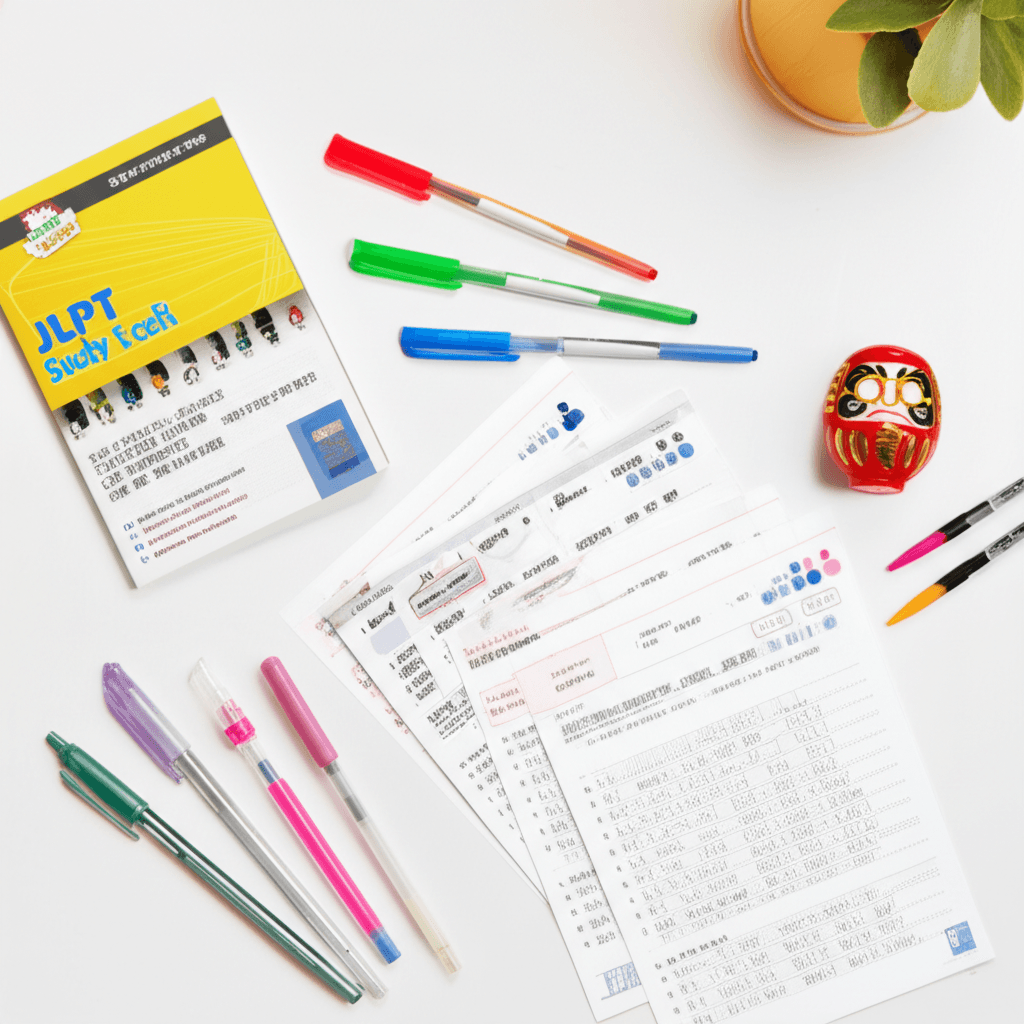
Why JLPT N5 matters
JLPT N5 isn't just a test — it's proof that you've built a real foundation. You'll know roughly 800 vocabulary words, 100 kanji, and enough grammar to understand basic conversations.
More importantly, passing N5 gives you the confidence to keep going. Most Japanese learners quit before reaching this point.
What JLPT N5 covers
Before we dive into the plan, here's what the test actually measures:
- Vocabulary: ~800 words covering everyday topics
- Kanji: ~100 characters (reading and meaning)
- Grammar: Basic sentence patterns, particles, verb conjugations
- Reading: Short passages about daily life
- Listening: Simple conversations at natural speed
The 3-month study plan
Month 1: Foundation (Weeks 1-4)
Week 1-2: Hiragana and Katakana
This is non-negotiable. You need to read both scripts fluently before anything else. Spend 30 minutes daily practicing writing and recognition.
Tip
Don't move on until you can read hiragana and katakana without hesitation. Speed matters — you'll need to read quickly during the test.
Week 3-4: First 200 vocabulary words + basic grammar
Start with the most common N5 words. Focus on greetings, numbers, time, family, and daily actions.
Grammar to cover: は/が particles, です/ます forms, basic adjectives.
to eat
to drink
to go
Month 2: Building up (Weeks 5-8)
Week 5-6: Vocabulary 200-500 + verb conjugations
This is where many learners struggle. Verb conjugation in Japanese has patterns — once you see them, it clicks.
Cover: te-form, past tense, negative forms, want-form (たい).
Week 7-8: Kanji introduction + reading practice
Start learning kanji alongside vocabulary. Don't learn kanji in isolation — always learn the words that use them.
Note
Spaced repetition (SRS) is essential for kanji. Review daily, even if just for 10 minutes. Missing a day compounds quickly.
Month 3: Test prep (Weeks 9-12)
Week 9-10: Complete vocabulary + grammar review
Finish the remaining N5 vocabulary and do a full grammar review. Use practice sentences, not just flashcards.
Week 11-12: Practice tests + weak areas
Take at least 2-3 full practice tests under timed conditions. Identify your weak areas and focus exclusively on those.
Study tips that actually work
1. Study every day, even if just 15 minutes. Consistency beats intensity. Your brain needs daily exposure to retain Japanese.
2. Use spaced repetition. SRS systems like FSRS schedule reviews at the optimal time for your memory. Japanese SenSei uses this automatically.
3. Listen more than you read. The listening section catches most people off guard. Watch Japanese content daily, even passively.
4. Practice writing sentences. Don't just memorize words — use them in sentences. This builds grammar intuition.
5. Find an accountability partner. Whether it's a study buddy or an AI teacher, having someone check in on you daily makes a huge difference.
Common mistakes to avoid
- Skipping hiragana/katakana practice — You need these to be automatic
- Learning kanji without context — Always learn kanji through vocabulary
- Ignoring listening practice — Start early, not in the last week
- Cramming instead of spacing — 15 minutes daily beats 3 hours weekly
- Not taking practice tests — The test format itself needs practice
How Japanese SenSei helps
Japanese SenSei's JLPT N5 curriculum covers all 800+ vocabulary words and 100+ kanji with FSRS spaced repetition. Your AI teacher sends you daily review sessions, tracks your progress, and adjusts difficulty based on your performance.
The best part? It feels like chatting with a friend, not studying for a test.
Ready to start learning?
Japanese SenSei teaches you through real conversation on Telegram — free to start, no app download needed.